

Fresh air and a comfortable home often depend on what happens just above your ceiling. For many homeowners in Moncton, controlling moisture and keeping indoor spaces healthy comes down to how well your roof can breathe. As homes across New Brunswick become more airtight, understanding roof ventilation is crucial for battling mold, maintaining steady temperatures, and protecting your investment. Discover how the right roof ventilation system can improve your indoor air quality and create a healthier, more efficient living environment.
Table of Contents
- Defining Roof Ventilation And Its Purpose
- Types Of Roof Ventilation Systems Explained
- How Roof Ventilation Improves Air Quality
- Risks Of Poor Ventilation And Cost Impacts
- Choosing And Maintaining The Right System
Key Takeaways
| Point | Details |
|---|---|
| Importance of Roof Ventilation | Roof ventilation is essential for maintaining indoor air quality and preventing structural damage. |
| Types of Ventilation Systems | Roof ventilation systems are categorized into passive and active types, each with unique advantages. |
| Health and Comfort Benefits | Proper ventilation reduces respiratory irritations and prevents mold growth, enhancing overall comfort. |
| Consequences of Poor Ventilation | Inadequate ventilation can lead to increased energy costs, health risks, and significant structural damage. |
Defining Roof Ventilation and Its Purpose
Roof ventilation is a critical home maintenance strategy that protects your living environment and property integrity. It represents the controlled movement of air through your attic and roof system, ensuring healthy indoor conditions and preventing potential structural damage.
At its core, roof ventilation involves two fundamental processes:
- Intake ventilation: Drawing fresh outdoor air into the attic space
- Exhaust ventilation: Removing stale, warm, moisture-laden air from the attic
The primary purpose of roof ventilation extends far beyond simple air movement. Proper ventilation controls indoor air quality by managing temperature, humidity, and pollutant levels. Without effective ventilation, homes can experience significant problems like:
- Moisture accumulation leading to mold growth
- Increased indoor humidity
- Potential wood rot and structural damage
- Higher energy consumption for heating and cooling
Modern building practices have made homes increasingly airtight, which paradoxically increases the importance of deliberate ventilation strategies. Sealed homes prevent natural air exchange, making mechanical and architectural ventilation systems crucial for maintaining healthy living environments.
Ventilation Mechanics
Roof ventilation systems typically work through two primary mechanisms:
- Natural ventilation using wind and thermal dynamics
- Mechanical ventilation using powered exhaust fans
Natural ventilation relies on temperature differences and wind pressure to move air, while mechanical systems actively pump air through designated pathways. Both approaches aim to create consistent airflow that prevents heat and moisture buildup.
Pro tip: Have a professional inspect your roof’s ventilation system annually to ensure optimal performance and catch potential issues early.
Types of Roof Ventilation Systems Explained
Roof ventilation systems are essential for maintaining healthy home environments, offering various approaches to managing air circulation and temperature control. Roof vents and ventilation systems come in multiple configurations, each designed to address specific architectural and environmental needs.
Primary Ventilation System Categories
Roof ventilation can be broadly classified into two main types:
-
Passive Ventilation Systems
- Rely on natural air movement
- Use wind and thermal dynamics
- No mechanical components required
-
Active Ventilation Systems
- Utilize mechanical fans
- Actively force air exchange
- Provide more controlled airflow
Passive Ventilation Options
Passive systems leverage natural principles to manage attic air circulation. These include:
-
Ridge Vents
- Installed along the roof’s peak
- Allow hot air to escape naturally
- Blend seamlessly with roof design
-
Soffit Vents
- Located under the roof’s overhang
- Enable cool air intake
- Critical for balanced air circulation
-
Gable Vents
- Mounted on side walls of the attic
- Provide cross-ventilation
- Work well in homes with specific roof configurations
Active Ventilation Technologies
Active systems use powered mechanisms to enhance air movement. These typically include:
- Powered attic fans
- Solar-powered ventilation units
- Electric exhaust fans
These systems can significantly improve air circulation, especially in homes with limited natural ventilation opportunities.
Ventilation System Selection
Choosing the right ventilation system depends on several factors:
Here’s a comparison of passive and active roof ventilation systems to help you choose the best option for your home:
| Aspect | Passive Systems | Active Systems |
|---|---|---|
| Energy Usage | No added energy consumption | Uses electricity or solar power |
| Installation Complexity | Simple, fewer moving parts | More complex, requires wiring |
| Cost Over Time | Lower maintenance, fewer repairs | Potential higher operating costs |
| Best Suited For | Simpler roof designs, mild climates | Complex roofs, extreme climates |
- Home’s architectural design
- Local climate conditions
- Attic space configuration
- Budget constraints
Proper ventilation requires a balanced approach, with equal consideration given to both intake and exhaust ventilation strategies.
Pro tip: Consult a professional roofing contractor to assess your specific home’s ventilation needs and recommend the most appropriate system for your unique environment.
How Roof Ventilation Improves Air Quality
Roof ventilation plays a critical role in maintaining healthy indoor environments by effectively managing air quality and reducing potential health risks. Intelligent ventilation systems optimize indoor air by controlling pollutant levels and ensuring consistent fresh air circulation.
Key Air Quality Improvement Mechanisms
Proper roof ventilation addresses multiple air quality challenges through several important processes:
- Diluting indoor pollutants
- Reducing moisture accumulation
- Preventing mold and dust mite growth
- Maintaining optimal oxygen levels
- Controlling humidity
Pollutant Reduction Strategies
Ventilation systems work to minimize harmful airborne contaminants by:
- Removing carbon dioxide buildup
- Eliminating volatile organic compounds
- Filtering biological contaminants
- Preventing stagnant air conditions
Moisture and Humidity Control
Excess moisture creates ideal conditions for numerous health hazards. Effective roof ventilation:
- Reduces condensation
- Prevents wood rot
- Limits mold spore proliferation
- Maintains balanced indoor humidity levels
Consistent air exchange is fundamental to maintaining a healthy indoor environment, directly impacting occupant well-being and respiratory health.
Health Impact of Proper Ventilation
Homeowners can experience significant health benefits from well-designed ventilation systems, including:
- Reduced respiratory irritations
- Lower allergy symptoms
- Decreased risk of mold-related health issues
- Improved overall indoor comfort
Pro tip: Schedule annual professional inspections to ensure your roof ventilation system continues to function efficiently and effectively.
Risks of Poor Ventilation and Cost Impacts
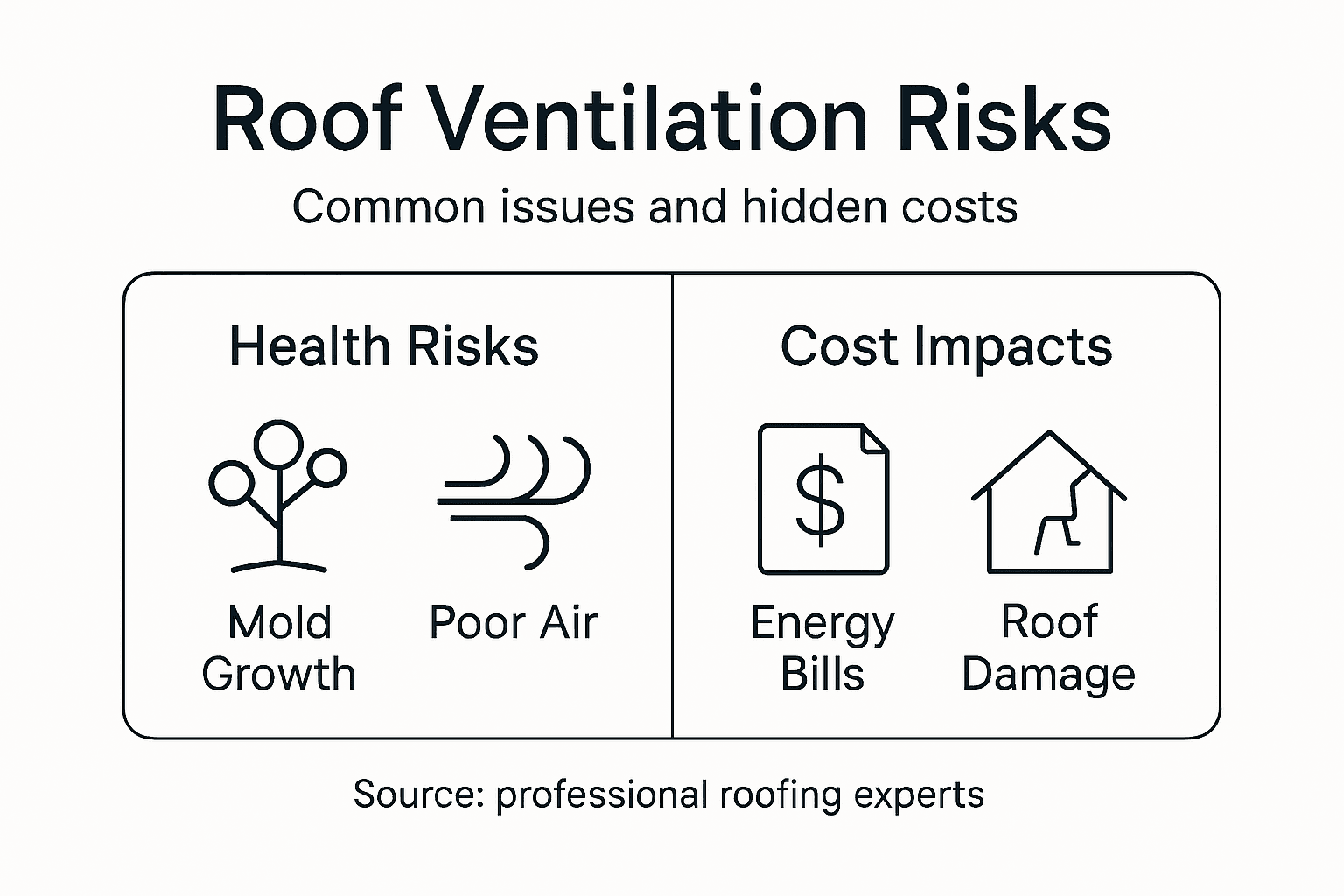
Poor roof ventilation can transform a comfortable home into a potential health and financial liability. Inadequate ventilation leads to significant structural risks that extend far beyond simple air quality concerns, creating long-term damage and unexpected expenses.
Structural Damage Risks
Without proper ventilation, homeowners face multiple critical threats:
- Accelerated wood rot
- Compromised roof structural integrity
- Insulation degradation
- Increased moisture-related damage
Financial Consequences
Poor ventilation triggers a cascade of expensive problems:
- Higher energy costs
- Increased HVAC system strain
- Premature roof replacement
- Costly moisture damage repairs
Health and Comfort Impacts
Beyond structural issues, inadequate ventilation creates significant health risks:
- Mold and mildew proliferation
- Respiratory health complications
- Indoor air quality deterioration
- Increased allergen concentration
Proper roof ventilation is not an expense, but an investment in your home’s long-term health and value.
Energy Efficiency Breakdown
Poorly ventilated homes experience substantial energy inefficiencies:
The following table summarizes the key problems caused by poor roof ventilation and their long-term consequences:
| Issue | Short-Term Impact | Long-Term Consequence |
|---|---|---|
| Excess Moisture | Dampness, discomfort | Structural rot, mold growth |
| Inadequate Air Exchange | Stuffy indoor air | Health risks, allergy flare-ups |
| Heat Build-Up | Higher AC usage | Increased energy bills |
| Pollutant Accumulation | Stale odors | Poor indoor air quality |
- Reduced thermal performance
- Higher heating and cooling expenses
- Increased carbon footprint
- Inconsistent indoor temperature regulation
Pro tip: Invest in a professional home energy audit to identify specific ventilation vulnerabilities and develop a targeted improvement strategy.
Choosing and Maintaining the Right System
Selecting an appropriate roof ventilation system requires careful consideration of multiple factors unique to your home’s specific characteristics. Roof ventilation selection involves comprehensive planning that balances climate, architectural design, and long-term performance goals.
Ventilation System Selection Criteria
Homeowners should evaluate several key factors when choosing a ventilation system:
- Local climate conditions
- Roof structure and design
- Home’s energy efficiency requirements
- Budget constraints
- Existing attic configuration
Passive vs. Active Ventilation Options
Two primary ventilation approaches offer distinct advantages:
-
Passive Ventilation Systems
- Lower maintenance requirements
- No additional energy consumption
- Cost-effective installation
- Rely on natural air movement
-
Active Ventilation Systems
- Controlled airflow management
- Electric or solar-powered fans
- Higher initial investment
- Better for complex architectural designs
Maintenance Strategies
Regular maintenance ensures optimal ventilation system performance:
- Quarterly vent inspections
- Remove debris and blockages
- Check for signs of moisture damage
- Verify proper seal around vent installations
- Monitor overall system efficiency
Proper ventilation is a dynamic system requiring consistent attention and periodic professional assessment.
Installation Considerations
Successful ventilation system implementation depends on:
- Precise vent placement
- Balanced intake and exhaust points
- Appropriate sealing techniques
- Professional installation expertise
Pro tip: Consult a professional roofing contractor to conduct a comprehensive ventilation assessment and recommend a customized solution for your specific home environment.
Enhance Your Home’s Comfort with Expert Roof Ventilation Solutions
Protecting your home from moisture damage and rising energy costs starts with proper roof ventilation. This article highlights the critical role of balanced intake and exhaust airflow in preventing mold, wood rot, and unhealthy indoor air quality. If you have noticed issues like increased humidity, higher cooling bills, or signs of structural wear in your attic, it is time to take action. At J. A. Kelly Contracting Services, we specialize in installing and maintaining effective roof ventilation systems that fit your home’s unique design and local climate needs.
Explore our comprehensive roofing expertise by visiting our Roofing Archives and discover how our certified professionals deliver lasting ventilation improvements. Don’t wait for costly repairs or health risks to arise—boost your home’s value and comfort today. Start your free estimate by contacting us through J. A. Kelly Contracting Services or learn more about our broad range of Home Renovation Archives that enhance overall residential quality. Your home deserves the best ventilation solution. Take the first step now.
Frequently Asked Questions
What is roof ventilation and why is it important?
Roof ventilation is the controlled movement of air through your attic and roof system, which helps manage indoor air quality, control temperature and humidity levels, and prevent structural damage from issues like mold and wood rot.
What are the main types of roof ventilation systems?
The main types of roof ventilation systems are passive and active systems. Passive systems rely on natural air movement, using elements like ridge vents and soffit vents. Active systems utilize mechanical fans to enhance airflow for more controlled ventilation.
How does proper roof ventilation improve indoor air quality?
Proper roof ventilation helps improve indoor air quality by diluting pollutants, reducing moisture accumulation, preventing mold growth, and maintaining balanced humidity levels, thereby promoting a healthier living environment.
What are the risks of having poor roof ventilation?
Poor roof ventilation can lead to issues like accelerated wood rot, compromised roof structure, increased energy costs, and health risks from mold and poor indoor air quality, ultimately affecting both comfort and the home’s value.
Recommended
- 7 Key Benefits of Roofing Upgrades for Homeowners – J. A. Kelly Contracting Services
- 7 Common Roofing Problems Every Homeowner Should Know – J. A. Kelly Contracting Services
- Energy Efficient Roofing: Lower Costs, Greater Comfort – J. A. Kelly Contracting Services
- 7 Essential Roofing Maintenance Tips Every Homeowner Should Know – J. A. Kelly Contracting Services
- Ventilación Mecánica Controlada: La solución para la condensación